

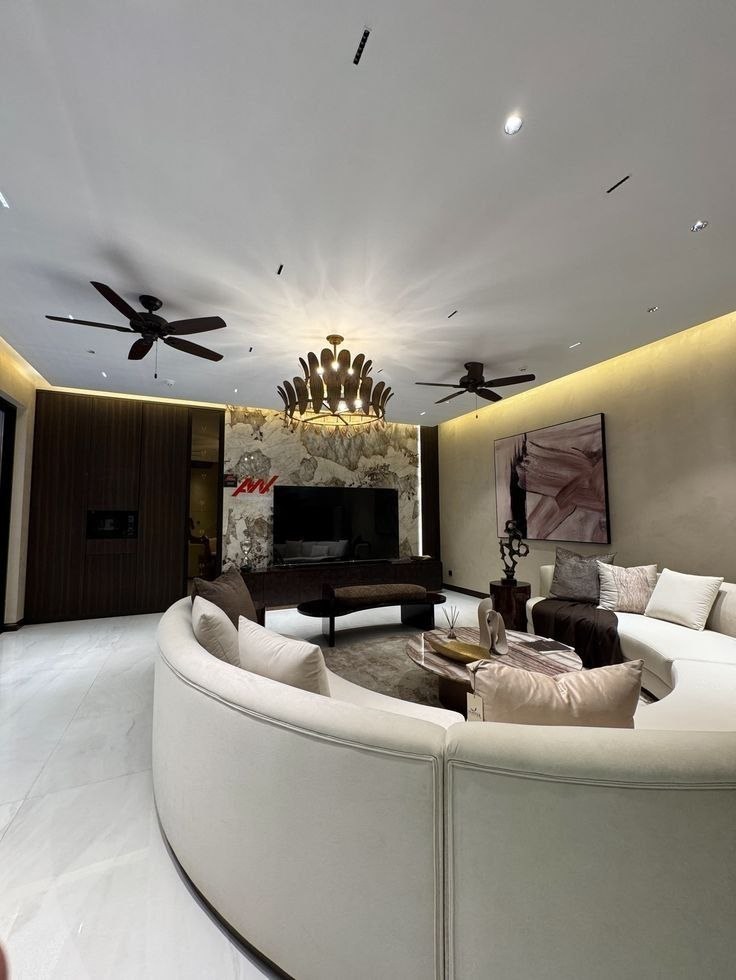
HVAC Architecture in Luxury Residences
Nothing disrupts a beautifully panelled accent wall quite like a plastic split AC indoor unit hung right in the center. Here is how central VRF/VRV ducted systems compare against high-wall split units.
1. Concealed Ducted / VRV Systems
- Aesthetics: Zero visible indoor units. Only architectural linear slot diffusers integrated flush into false ceilings or above doors.
- Performance: Uniform cooling without freezing drafts; variable refrigerant flow scales power consumption based on active room occupancy.
- Ceiling Requirement: Demands 12 to 14 inches of false ceiling drop along service corridors and closets to house the indoor fan coil units (FCUs).
2. Inverter Split ACs
- Aesthetics: Visible white plastic wall units; requires exposed drain and refrigerant pipe trunking if not pre-planned into brickwork.
- Cost: 40% to 50% lower upfront equipment and ducting cost than central VRF.
- Maintenance: Individual compressor units are easier and cheaper to repair independently.
Architectural Compromise: If full ducting isn't viable due to low slab heights, use high-wall Cassette ACs centered in false ceilings or tuck split units into custom louvered joinery niches with free air intake.