

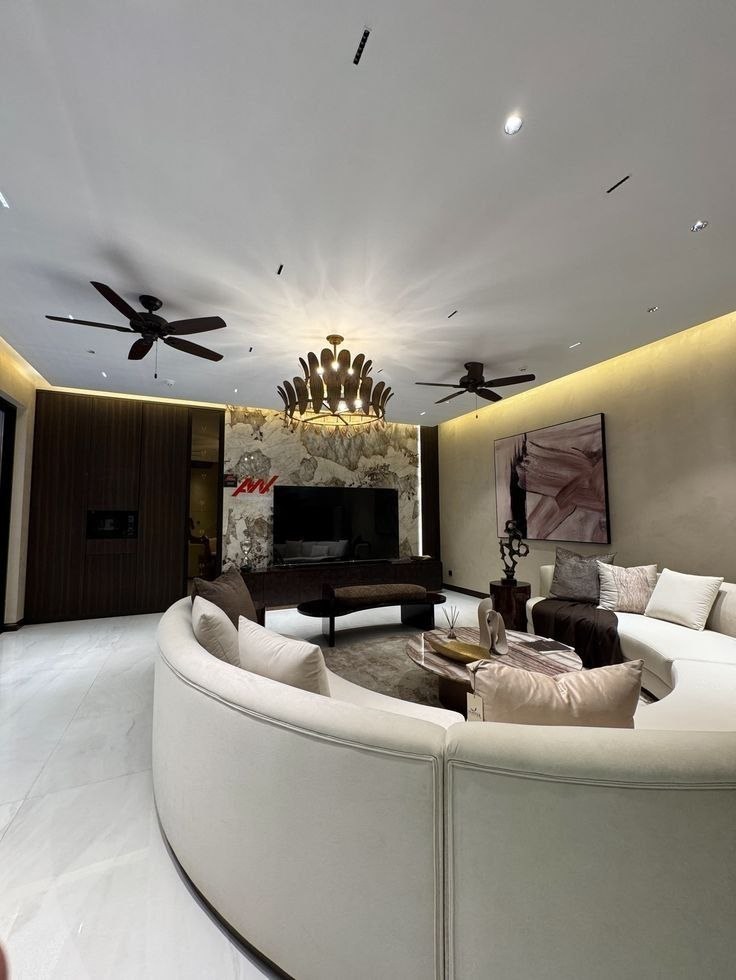
Why Lighting Makes or Breaks Your Interior
You can spend ₹30 Lakhs on exquisite Italian marble and bespoke veneer joinery, but if you light it with harsh 6500K daylight LED tubes, the space will look like a clinical pharmacy. Lighting color temperature (measured in Kelvin) dictates mood, circadian rhythm, and color rendering.
1. 2700K (Soft Candlelight Warm)
- Vibe: Intimate, relaxing, cocoon-like.
- Where to Use: Bedside reading sconces, under-cabinet floor night lights, bar lounges, and dining chandelier accents.
2. 3000K (Warm White — The Designer Gold Standard)
- Vibe: Welcoming, elegant, rich color vibrancy.
- Where to Use: Living room false ceiling cove lighting, architectural spotlighting on artwork, bedroom ambient lighting, and hallway downlights.
3. 4000K (Neutral White — Clean & Crisp)
- Vibe: Focused, energizing, daylight-balanced without turning blue.
- Where to Use: Kitchen prep counters (under-cabinet task strips), study desks, wardrobe dressing mirrors, and bathroom vanity makeup lights (CRI > 90).
Avoid 6500K in Residential Living Areas
6500K mimics overcast noon sunlight and suppresses melatonin production. Keep it restricted to utility areas, laundry shafts, or basement parking.
Golden Rule of Layering: Combine 3 lighting layers in every key room: Ambient (recessed cove/downlights at 3000K), Task (directional reading/prep light at 4000K), and Accent (wall sconces/LED strip niches at 2700K-3000K).